Wednesday, February 22, 2012

My Useful and Aesthetically Pleasing Guitar Chord Chart

Look at how aesthetically pleasing that is (Click here for extreme closeup!)

I put together this chord chart to share on Reddit and I am quite proud of it, so I thought I'd share it here too. Fair Warning: this will probably be a very boring/confusing read if you aren't a musician.

Chords are what make the guitar an interesting instrument. There are two kinds of instruments: 1-note instruments and many-note instruments. Guitar is nice because you can play 6 notes at once if you want (or more if you're weird like that). Here's how to make sense of guitar chords.

Chords usually stay in a key
Whenever you hear a relatively simple song, the musician will usually stay in the same key. Each key is a scale of 7 notes and for each scale, there is a set of 7 chords which only contain the notes of the scale. My chart is organized so that each row is a different key and I have all 7 chords there for easy access.

Take the key of G. The G scale is G-A-B-C-D-E-F#-G (7 notes plus the octave). The chords in the key of G are G (G-B-D), Am (A-C-E), Bm (B-D-F#), etc. If you look at all the chords in the key of G, they only contain notes in the G scale.

If you were strumming along in the key of G and decided to play an E chord (E-G#-B), it would sound weird since G# is not in the key of G. You'd be able to tell that something was different. Anybody that listens to music semi-regularly would notice this because our ears are used to hearing chords that stay in the key. There are ways of using out-of-key chords, but generally a simple song will stay in the same key. Particularly in church. If the band is playing in one key and decides to switch to another key, it is hard to get everyone in the building to follow, so most worship songs try to stay in the same key.

What is a key?
A key does not only tell you how many sharps or flats are in the scale. It also tells you what chord the song resolves on. This may mean that the song starts and/or ends on a specific chord, but the song will not necessarily start or end on the 1st chord of the key (the tonic). It simply resolves on that chord.

A song that I wrote contains the chord progression C-G-D-Em-C-G-D in the verse and Em-C-G-D in the chorus. Looking at all the chords in the song and comparing it with my chord chart, you would know that it is either in G major or E minor. To me, it can be somewhat ambiguous as to whether a song is in a major key or its minor key counterpart. But if you heard the song, you would hear that the verse has a G "major" feel, but the chorus has an E "minor" feel. The verse doesn't start or end on D, but if you heard that last D in the progression, you would naturally feel like a G chord would resolve it nicely. The chorus is a bit more obvious about it resolving on the Em since the progression starts on the Em.

Steps in a Scale
This chart is a periodic table of sorts. Each column represents a specific step in the key. The steps are I-ii-iii-IV-V-vi-vii° (same thing as do re mi fa so la ti (do)). Uppercase means it's a major chord, lower case means it's a minor chord, and lower case with a ° sign means it's a diminished chord. Every major key has the same set of steps. So in any key the first (I), fourth (IV), and fifth (V) are always major chords and the same goes for the minor chords and diminished chords. What this means, is that I can play my C-G-D-Em (IV-I-V-vi) progression in the key of G and it will sound incredibly similar to the progression F-C-G-Am (IV-I-V-vi) in the key of C. All the pitches will just be equally shifted to higher notes.

Practically speaking, this is very useful when you encounter a song that's in a horrible key like Eb. If you play guitar, you know that Eb-Fm-Gm-Ab-Bb-Cm-Ddim aren't exactly fun chords. I'd much rather play in the key of D. So, what you can do is capo the first fret since Eb is a half step higher than D and then change all the "I" chords in Eb to the "I" chords in D, all the"vi" chords in Eb to the "vi" chords in D, etc. Once you do this, you can comfortably play with a capo in the key of D while everybody else is playing in Eb.

Circle of Fifths
Now there is a very good reason why I organized the rows the way I did. When I first saw this chart it was organized ABCDEFG and it totally frustrated me that it was organized that way. To a musician, it makes much more sense to organize different keys according to the Circle of Fifths.


The circle of fifths is organized according to fifths (big surprise). So the fifth of C is G, the fifth of G is D, the fifth of D is A, etc. This is useful for a few reasons. One is that you can look at any key in the circle and know the 6 minor and major chords in that key. Every key has 3 major chords and 3 minor chords. So if you look at C, you see that the chords F and G are the other major chords and the chords Dm, Am, and Em are the minor chords. Then you just have to know that the 7th of the key is going to be the diminished chord of the key, but those of us who are lazy rarely use diminished chords anyway. Another handy thing about the circle of fifths is that as you go around the circle, you add or subtract a sharp or flat, which you can see in my chord chart. Because of this, neighbors in the circle share 6 common notes. Because they share so many notes, it is easiest to modulate between neighboring keys in the circle. A music major, or somebody who paid more attention in music theory than me, might be able to tell you more reasons the circle of fifths is amazing, but these are all the reasons I know.

So there you have it. My guitar chord chart. If you click here, it gets nice and big and mostly printable.

Tuesday, January 17, 2012

iPhone Pixel, Up Close and Personal


Look at this screenshot I took on my phone. Isn't it beautiful? Good resolution, nice colors, 70% battery life, and almost lunchtime. Everyone knows that a screen is made up of a bunch of tiny little pixels, but most of us have never actually seen an individual pixel. Well that's because there are 614,400 pixels on an iPhone, which means each pixel is about 80 microns wide, which is too small for us to see very well.

In my boredom, I decided to look at my phone's screen under a microscope to see what a pixel looked like. At the lowest magnification, the upper left image in my screenshot looked like this:


You start to see the pixelation, but not very much detail. So I went further.


Now you can see it nicely. Each pixel has 3 segments which shine red, green, or blue. On the top, you can see that only the red segment is on, making the color red. The left has green and red on, so it makes yellow. The right has red and blue on, so it makes magenta. And the bottom has all three on, so it makes white. For completeness, I got the other two corners of the picture.


And to top it off, I zoomed in one more time to take a look at the white region.


So that's what 63 iPhone pixels look like.

How does it work?
(The boring part where I talk about science, so feel free to stop reading)


Each segment in the pixel gives off a certain wavelength of light. Blue is the shortest wavelength and red is the longest wavelength.


If only the blue segment is on, the picture looks blue. The same goes for green and blue. Hopefully that makes sense. If not, I don't know what to tell you.

It starts to get tricky when you start mixing colors. Blue+Green=Cyan, Green+Red=Yellow, and Blue+Red=Magenta. An segment screen makes up different combinations of the three segments to make all the different colors. I'm just going to look at the colors you can make with equal parts of 2 colors.

First, take a look at Blue+Green.


Add Blue and Green and you get Cyan. So you basically see the average color, who's wavelength is halfway between blue and green. That kind of makes sense, but it starts to get trippy when you look at the other combinations. Here's Green+Red.


I don't know about that. Green and red are supposed to make yellow, but Green+Red doesn't quite look like yellow. Even if it doesn't look the same, the color that we see is still at the average wavelength of green and red. Lets look at the last combination, Blue+Red=Magenta.


When you mix blue and red, you see magenta. But the average wavelength of blue and red is 563nm, which is green. Why does your brain do this? Apparently the brain has 2 options. It can either take the average wavelength and make it look like that color or it can make up a brand new color. In the case of magenta, your brain just made up a brand new color. Weird huh?

And that's why I am not a neurologist.

If you want to try to make up crazy spectra and see what color it makes, go here:
http://www.pfk.ff.vu.lt/cie/0_Spectrum_Applet.htm

Tuesday, November 15, 2011

The mice in our walls

We have mice living in the walls of our house. We found one dead under our sink and I could swear I've heard them scratching the wooden walls of our basement. I decided to write a story from their point of view. Pardon the abrupt ending.


I found my friend Jim's dead body in the dark, under the sink. It's been 7 months since I last saw him. It's horrible that it's still here but we've had no way of burying him. Our only option is to hold our breath as we pass and move on with our day.

I can't help but remember how it happened every time I pass him.

Every winter we move into this townhouse to stay warm. The field is much safer but when it gets cold we have no option. We had been spending the day looking for food, as usual. It was February and we only had another month before we could move back to the field.

Our nest is between the walls of two town houses, far away from any opening where we might find poison or a mouse trap. Every morning Jim and I would wake up early while our families were stil sleeping and we would go out into the house.

There was a trash can in the kitchen with a hole in the bottom. This was our saving grace last winter. The can always had so much food in it, we always were able to carry back armloads of food. Our wives would great us with kisses and they would jump to the task of preparing the food for breakfast.

This went on for the whole winter. Jim and I would make one trip a week to get the food and we could live in quiet and safe for the rest of the week.

It wasn't until the beginning of February that life started to get difficult. The trek to the trash can was always a dangerous one. We always did it early in the morning while it was still dark, before the humans woke up. Our passage ways are usually between walls and beneath floorboards, and we spend as little time exposed as possible. The trash can was in the kitchen upstairs and our nest was almost on the opposite side of the house. The trek started with a vertical climb up a 2 by 4. Last winter Jim and I built handholds in the wood to make the climb safer. We even found a strong piece of string that we looped at the top and used to belay each other up the 8 foot pole. We are good climbers but take no unnecessary risks, knowing how dependent our families are on us.

After climbing up the pole, we traversed along a cross beam that took us to the small bathroom on the second level. We dug a hole in the wall under the bathroom sink a while back. There are several holes around the house that we can use in case of an emergency. We do our best to disguise them so that the humans don't notice.

We had no reason to go into the bathroom that day because we had a bit further to go to get to the kitchen trash can. Walking between the walls, we would soon get to the broom closet. This is where Jim and I get nervous every time, because this is the only part of the trip that we are exposed to the open rooms. We quietly look around the corner for any sign of light. If a light is on or if there is the faintest noise, the entire mission is called off for the day and we have to come back the next day.

This time we saw and heard nothing. The humans were still sound asleep and we were excited to get our food. Yesterday we smelled fresh bread from our nest which meant the old stale bread would soon be in the trash can. We quietly walked across the kitchen floor to where the trash can sat. The hole we entered through is on the outward facing corner, so we quickly climbed into the can to start our search for the bread. We found half a loaf of bread in there! This could last us two weeks if we could get all this bread back to the nest. Jim and I started taking the bread back to the broom closet where we knew if would be safe. He would grab a piece and meet me at the hole, where I could take it and bring it over to the broom closet.

I was on my last trip back to the can to get the last piece of bread. All of a sudden the kitchen light came on and directly above me stood a young girl. Her face went white and she screamed loud enough to shake the entire house. As she screamed she pulled her arms in and jumped from one foot to the other on her tip-toes. "Daddy! There's a mouse in the kitchen! Help, Daddy!"

I froze in place and had no idea what to do. In my confusion, I ran towards the trash can and hid inside. Jim and I were huddled together in there as we heard a rumbling. The father must be coming downstairs. Jim and I shivered with fear and held our breath. I peaked through a crack in the can and saw the father walking towards us with a baseball bat in hand. "They went into the trash can through that little hole!" We could hear the father step up towards us and grab the trash can. If we stayed in there any longer, he would surely trap us and kill us, so our only option was to run. I told Jim, "On the count of three we're going to run across the kitchen and into the broom closet hole. Ready? 3...2...1... Go!"

We darted out of the can and headed straight for the closet. "There they are!" the little girl screamed. Just a few steps from safety we heard a whoosh of air and right when we got into the hole the bat slammed into the ground, cracking the wooden floor. Our hearts were pounding, but we were safe. Our wives must have been scared to death with all the noise, so we quickly made our way back to the nest.

Jim and I embraced our wives and children and we were all crying because of the incredibly close call. I looked at Jim and the look on his face told me that we were thinking the same thing. This house may never be safe for us to live in again.

We went back to the broom closet later that day to get the bread we left there. Every hole we passed along the way had a mouse trap at the entrance. Sure enough, each trap had a beautiful block of cheddar cheese, just waiting to tempt us towards our death. We looked out the hole in the broom closet and saw no trash can anymore. The family had left the house, so we peaked out some more and could not see any hope for more food. I didn't know if we would survive without that trash can. This was a very clean family and there was never a speck of food anywhere on the floor.

Through the next week Jim and I talked it over. Should we leave the house to the unknown neighbor houses? Or should we stick it out for the last month of winter and find food where we can? We decided that we wouldn't give up hope on this house. This had become our home. We knew everything there was to know about the house and we were comfortable there.

The scarcity of food was a huge problem. Jim and I found a way to get onto the counter in the kitchen, but we found every cabinet locked shut. There was very little. The only food we ever found was in the kitchen sink strainer. It was always wet and smelly, but it was food.

So after three weeks of this we grew tired and hungry. The food was never enough and it was just disgusting. With just a couple more weeks of winter left, Jim and I went back upstairs to look for food. The mouse traps had been restocked with fresh cheese and the smell was intoxicating. I caught Jim staring at the piece in the broom closet. "What if we could outsmart the trap?" he asked. "I'm hungry, my kids are hungry and I could really use a good piece of cheese. Look, I could just stick one paw out, grab it really quickly, and we'd be alright." I really wanted the cheese too, so I shrugged my shoulders and gave him a nod of approval.

He inched closer to the trap as quietly as he could for fear of the sound setting it off. His paw reached out slowly. In an instant he grabbed for the cheese and WHAP!

And that's what I think about whenever I pass his dead body that the humans never removed.

Friday, October 21, 2011

Baseball and Physics Unite!

If you watched game 1 of the World Series on Wednesday, you had the joy of seeing infrared video. Fox thought it would be cool to bring an infrared camera along with them to St. Louis and it was, indeed, a good idea. Adrian Beltre of the rangers hit the ball down the 3rd base line but he didn't run for some reason. The cardinals threw the ball to 1st and Beltre was called out. Beltre claimed that the ball hit his toe, which would mean it would be an automatic dead ball and would just be considered a foul ball. But the regular cameras couldn't prove the umps wrong.

The regular, real-time video makes it look like the ball didn't actually hit Beltre, but that he just faked it. Yeah, that's possible, but he sure did a really quick job of acting with the way he reacted to the ball hitting his toe.

FOX had demonstrated their infrared camera earlier in the game when Pujols hit the ball into his own foot. The infrared video showed a bright spot on his left foot light up right when the ball hit it.


Being a physics nerd, that was pretty cool to me. But being somebody who always thinks about applications, I didn't quite get the point...at least until the 9th inning.

Beltre was up to bat. There was one out with nobody on base. Beltre was 2 for 3 so far for the night, so he was hot. Feeling confident, he went after the first pitch-a fastball, and never even left the batter's box because he claimed the ball hit his toe. The umps didn't believe him so they called him out. 2 outs. Nelson Cruz was up next and flew out to left field for an anti-climactic defeat.

FOX showed the replay using the regular video and you couldn't see anything that was conclusive enough to overturn the call. It was pretty hard to believe Beltre until they showed the infrared video.


By golly, the ball barely nicked his toe! That should have been a foul ball. He could have hit a home run the next pitch and sent the game to extra innings! Baseball is a game of comebacks. 9th inning, 2nd out rallies can actually happen in this sport. It's part of the reason I love the game so much. The Rangers were only behind by 1 run and the smallest things can make a huge difference. Oh well.

How it works
Infrared cameras are very cool. Infrared light is just like the light you see all the time, just with a longer wavelength, so you can't see it with your eyes. But cameras can be built to detect infrared light. In fact, the last project I worked on was, in simple terms, a color infrared camera pixel.

Infrared cameras are great for night vision because it distinguishes between things with different temperatures. All the things you see around you are emitting infrared light based on their temperature (and emissivity, which I won't talk about for simplicity's sake). The warmer something is, the more intense the infrared light coming off of it is. So when the baseball hit Beltre's toe, the impact warmed up the spot, causing it to emit extra infrared light than the spot did before it was heated up. It takes time for the heat to dissipate, so the "hot spot" stays there for as long as the temperature at that spot is still high.

Why does the high temperature cause the spot to emit infrared light? If you remember my last post about heat transfer, you remember that high temperature means the molecules are vibrating around a lot more. Well the vibration of molecules causes them to radiate. That's exactly how an antenna works. So when temperature increases the vibrations occur at higher amplitudes and frequencies, causing the intensity of the light to increase. You saw the intensity increase when the temperature of Beltre's toe went up.

This effect is called thermal radiation. At room temperature it happens at infrared wavelengths. But if you increase the temperature the intensity increases and the wavelength decreases because of the higher-frequency vibrations. The following graph shows how the emission spectrum changes as you increase the temperature of something.

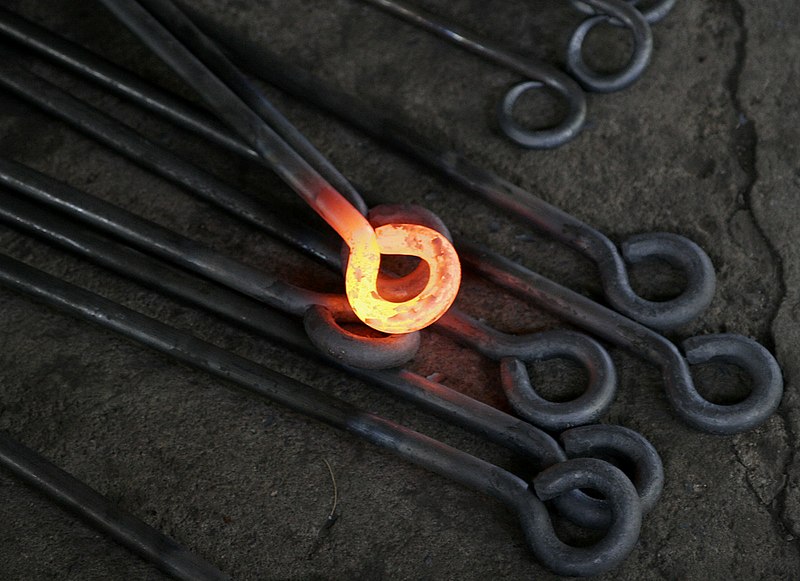
If you heat something up enough, you can start to see the radiation in visible wavelengths. This is why metal glows when you heat it up. It's also why incandescent light bulbs work.


Now you know how infrared light gives you extra information that visible light cannot give you. And you now know what thermal radiation is. Pretty cool huh?

Friday, October 7, 2011

Office Physics: Coffee Thermos


There are few worse feelings than when you come back to your coffee only to find out that it's luke warm. Sure you could microwave it, but something weird goes on there and makes the coffee less tasty than it would if it had never cooled in the first place (don't ask me why). Since I've never had a coffee maker at work, I've often solved this problem by putting my coffee in a thermos. They're wonderful inventions. They keep your coffee nice and hot for several hours if you have a good one. But how does it work?

It uses insulation. This is the exact same idea as when you put insulation in your attic. It's also the same idea as wearing ear muffs. Insulation is a barrier between a "hot reservoir" and a "cold reservoir." So when you put your coffee in the thermos, it is the hot reservoir and the air outside of the thermos is the cold reservoir.

When I say that insulation is a barrier, what I mean is that it slows down the transfer of heat. In the case of hot coffee, heat transfer is bad bad bad! I want my coffee to stay at the exact same perfect temperature until I've finished my last sip of coffee, gosh darn it! Sadly that's impossible. And sadly no thermos works perfectly. So if you leave coffee in a thermos long enough, it will eventually get to room temperature.

So why does heat have to transfer from a hot thing to a cold thing? It would make winter more enjoyable for me if all that cold air didn't suck all the heat out of my body. I think there are different ways to answer the question. You need to understand what temperature is first.

Temperature is (for our purposes) a measurement of how fast the molecules are moving around randomly. If the air around you is hot, the air molecules are moving around very rapidly, bouncing off one another in a random way. If the air around you is cold, then the air molecules are still bouncing around off one another randomly, but much slower.

So when your energetic warm skin molecules come into contact with the slow, cold air molecules, the energy is transferred to the air molecules, warming them up and cooling you down. Same idea as billiard balls. The energy in the cue ball is transferred to the other balls when it runs into them.

That's heat conduction, which is part of the reason your coffee gets cool. The coffee heats up the air it's in contact with. But the second form of heat transfer, called convection, is probably the most important reason your coffee gets cool.

Heat conducts more slowly when the temperature difference between the two reservoirs is small. So as your coffee heats up a particular group of air molecules, it has a harder and harder time dumping the heat into them. But the problem is that the air that's been heated up will get out of the way and make room for fresh, cool air to absorb the heat. So conduction and convection work together to cool down your coffee.

Air molecules are actually really bad at conducting heat, which is the same thing as saying that air is a good insulator. So it turns out that you could solve most of the problem by eliminating convection--to figure out a way to keep the air from moving around a whole lot. So for coffee thermoses, a metal shell is placed around the core so that there is a thin layer of air between the two metal cylinders. This keeps the air from moving around too much and slows down the heat transfer.

So that solves the problem. Now we can enjoy our hot coffee.

Friday, September 30, 2011

The Moment that Made the Year for Me


Sitting on a plane has always felt like a homecoming for me. Having lived in a different state from my parents for 6 years means lots of plane trips home for Christmas and summer. Like Pavlov's dog, I had it stuck in my head that sitting on a plane meant going back to something familiar-something comfortable. 


I guess that's what made the plane ride such a surreal experience. It felt like the same old flight home, but I had to keep reminding myself, no Jon, you're not going home. You're going somewhere you've never been, all by yourself. It didn't feel real. I had a hard time comprehending what this flight really meant.


Over the previous 6 months I had been preparing to go on a bike tour from the Canadian border to the Mexican border along the Pacific coast. It started as a daydream and as the months passed, it came a lot closer to reality. I started buying gear and training. Slowly but surely I worked up to 40 mile rides and my pile of cycling and camping gear got bigger and bigger, not to mention the money in my bank account started depleting. 


My whole approach to preparing for the trip was non-committal. I started out buying gear that would be useful for me whether or not I actually went on the tour. I saw my training routine as something that would be good for me even if I decided not to leave on the trip. 


I had been telling myself this adventure story, but I couldn't decide if the story was fiction or non-fiction. But sooner or later I would be forced to decide.


Looking back at the experience, I'm reminded of Don Quixote. He lived a boring life as an old man with his niece taking care of him. He sat around the house reading chivalry books about knights and giants. He kept reading stories, but never had a story of his own. But his life changed when he really believed the stories were true. Even under the ridicule of his closest friends and family he chose to believe the story of chivalry and decided to live it himself. He got off his bed, constructed a suit of armor, and began his adventures as a knight. It was only at the point when he believed the story was true that he was changed as a person.


I finally got to the point where I acted like my adventure story was really real. There was still some doubt in my mind, but on May 23rd I packed my gear and got on the plane to Bellingham. I looked out the window and saw the Rockies pass by--a familiar sight that only made the flight feel like my homecoming flights to Alaska. After a few hours we landed in Seattle, the airport I almost always fly through on my way to Alaska. I spent the night sleeping on the Seattle airport floor and it passed by incredibly slowly. So this is what I'm getting myself into--sleeping on hard surfaces for 40 days straight. Great. 


In the morning I got on my connecting flight to Bellingham, which is a town very close to the Washington-Canada border. I had heard that one of the most beautiful parts of the Washington leg of my tour would be the view across Puget Sound at the evergreen covered islands jutting out of the water. As the sun was rising I could look out the window and see the breath-taking Puget Sound view. I wonder if I'll be riding across any of those islands. The flight was short-only about 30 minutes and as we were descending I looked out and saw the roads of northwest Bellingham. I had seen these roads before on Google Maps. I saw the interstate that I'd be riding under and then paralleling on my way to the border. And I saw the airport just to the west of the freeway in the same place that Google showed me. This was starting to feel real.


My knees started shaking and I was, all of a sudden, very nervous. Here we go. The plane landed, I got my gear off the baggage claim, and started assembling my bike. I spent an hour in the middle of the tiny airport putting the bike together and packing my gear. People stared at me, wondering what the heck I was doing. My whole body was shaking out of excitement and nervousness. I eventually changed into my cycling clothes and came out to my bike. It was ready to go. Tires inflated, handlebars attached, brakes engaged, bolts tightened, water bottles filled, and panniers closed. 


I walked out to the drive way and straddled my bike, taking a picture to prove that my odometer did, in fact, start at 0.0 miles. I looked around me with a huge smile on my face. I pushed forward, clipped into my pedals, and started pedaling. 


Finally, I knew this was real. I knew there was no turning back and I knew that this was going to be the greatest adventure I've ever done.


A Note from Jon: This was my submission to my friend Anthony's annual writing challenge. The assignment was to write about an hour or a day that really made the year for you. 

Monday, September 26, 2011

Why You Should Consider Commuting by Bike


There are a lot of good reasons to ride a bike. There are also a lot of good reasons to drive. But I think everybody already knows the good reasons for driving, so I'm going to give you lots of good reasons to start biking more.

Commuting by bike is a particularly good way to ride a bike more. You have to go to work everyday anyway, so riding a bike instead of driving a car isn't that ridiculous of an idea. It's still being productive, in that you're getting from one place to another. Work can also be the most stressful time of the day, so a nice bike ride home can be a great stress reliever. Commuting is also a convenient time because you can figure out one bike route that works for you and stick with it every time you ride. Finding bike routes can be difficult if you bike all around town. But if you're always going between two places, it's very manageable.

If you know me, then it's obvious that one of my top reasons for biking so much is that I don't have a car. However, if I had a car, I would still commute by bike regularly. The main reasons I'd keep it up are because it's good exercise, it's refreshing, and it's cheap. And yes I'm saving the environment in the same way that an ocean can be filled one drop at a time. Well la-dee-fricken-da!

Cycling isn't a particularly exhausting exercise, but it raises your heart rate and burns calories. How many calories? About 11.2 calories per minute according to healthstatus.com. If you weigh 170lbs and ride between 12 and 14mph, then your calorie graph would look like this:


So if the distance between your house and work was 6 miles, then you'd burn about 600 calories per day, assuming you rode down and back at 13mph the whole way. That's pretty good. If you're like me and have trouble scheduling time to work out, then riding a bike to work is a good way to force yourself to get some exercise into your day. And we all know what that means...you get to eat more food!

Riding your bike to work can also save you some money. Fuel costs are much lower since you probably won't be burning gasoline while riding a bike. Your food costs might go up slightly, but not by much. If you get 27mpg and gas is $3.50/gallon, then your fuel cost looks like this:


So if you did a 12 mile commute 3 days a week, that would save you enough for an extra Chipotle burrito with guacamole and a drink every week! Just think about how much happier you would be if you could afford to add another burrito to your week. You would also save a bit on wear and tear, but I am way too lazy to figure that out for you.

I wouldn't be so bold as to say that bike commuting is bundles of fun, but it's definitely at least a handful of fun. It's a very refreshing way to start the day and a relaxing way to end the work day. You'll feel good after the ride and will have had some good time to just let your mind relax.

Commuting by bike is a great thing to do and I think you should consider trying it out. There are obvious limitations like 50 mile commutes and evening commitments that can make it difficult. But if your commute is short enough, you should consider riding a few times a week on your days where you have a some extra time.

Plus, I get really giddy when I see people riding bikes, so you'd at least put a smile on my face.